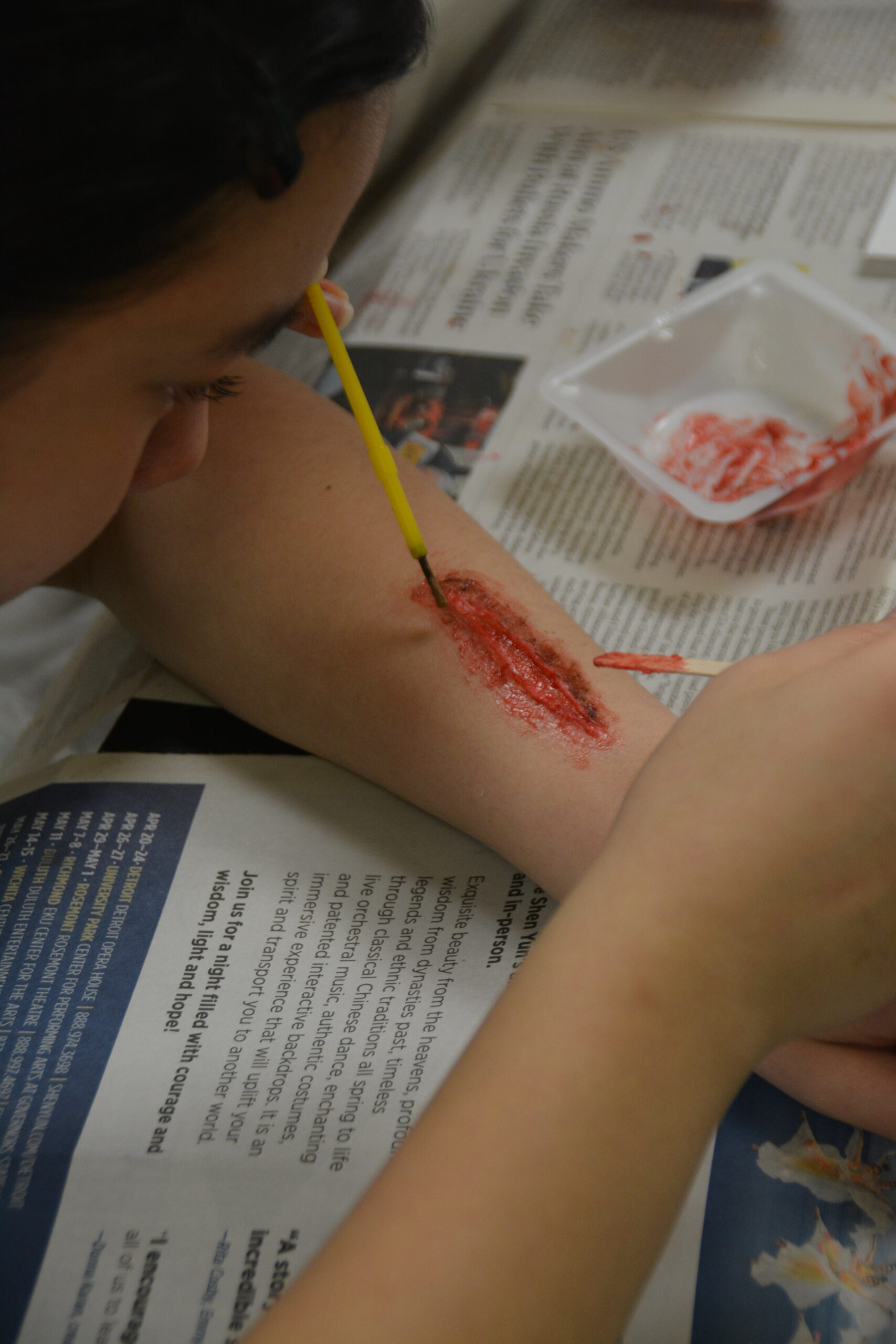
Anatomy classes conducted a “wounds lab” on Oct. 30 in which they manipulated everyday household items into realistic injuries.
The goal of the lab was to demonstrate what skin looks like when wounded and how it begins to heal. Students chose between making a laceration, puncture or any degree of burn.
“We’ve been learning about how tissue can be damaged and hurt and the ways our body responds to that and heals,” junior An Vu said. “It was really interesting to see what it looks like on an actual person. It was also a fun, interactive experience, especially around Halloween.”
Students planned out which injury they wanted to create and the steps to do so the day before the lab. The day of, they took all of class to bring their ideas to life.
Some materials used were toilet paper, red dye, Vaseline, cornstarch, glue, coffee grounds and other common items.
“I put Vaseline down, then the toilet paper and on top of that was more Vaseline colored with red food dye,” junior Ellie Andres said. “Lastly, we put on cocoa powder which turns the red into a really dark brown; it makes it look crispy and burnt. The toilet paper was able to bunch up in spots, so it makes the skin look damaged.”
Students quickly discovered making the wounds look real was not as easy as it may have seemed to be.
“The challenges were really just making it look like blood,” junior Cecilia Nguyen said. “The Vaseline would make the red look pink, so you had to add more red dye and such to make it look realistic.”
Once they perfected their creations, many people had fun seeing the reactions of their friends and testing who thought it was a real injury.
“Somebody said that it was a jumpscare walking into their classroom,” Andres said. “Once they realized it was fake they were like, ‘Okay, I can look at it now and not be disgusted.’”
While many students enjoyed the lab for the hands-on aspect, it also brought their previous lessons to life in a more tangible sense than before.
“This lab was kind of like a visual for the things we’ve been taking notes on,” Vu said. “Knowing this information and seeing it in real life gives me a deeper understanding on what can actually happen to our bodies and how our bodies are built to be able to repair damages like that.”